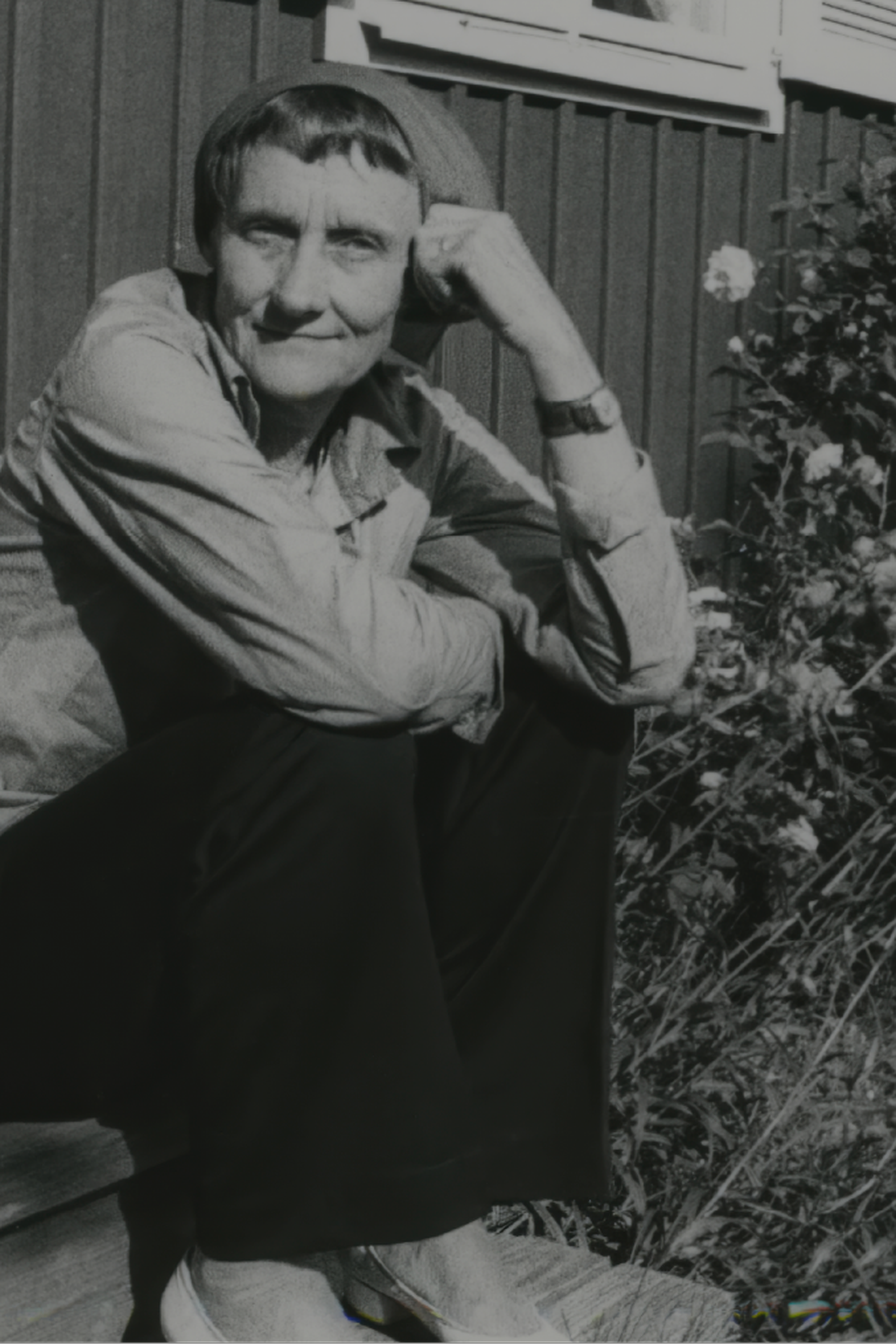
"There are things you have to do, even if they are dangerous. Because if you don’t you are not a human being, you’re nothing but a little louse."
from The Brothers Lionheart (1973)Courage to be human
In 2027, 20 years have passed since Astrid Lindgren was born on the farm Näs outside Vimmerby, Sweden.
A happy childhood in the countryside was followed by difficult teenage years and world war. Shortly after the war ended in 1945, she made her breakthrough with Pippi Longstocking, and an exceptional career as a world-famous author followed.
Her books and life have left a lasting mark on individuals and on the world at large. She was a courageous voice in public debate, a champion of non-violence, children's rights, animal welfare and human dignity.
When she died at the age of 94, she left behind a changed world, a world that today, more than ever, needs the all-encompassing humanism that Astrid represented. She stood up for what she believed in, so that the world would become a little better. Not because it was convenient, or comfortable. But because it was right. Because she had the courage to be what she – like Jonathan in The Brothers Lionheart – believed it meant to be a human being.
Who was Astrid Lindgren?
Many people, especially outside Sweden's borders, know Astrid Lindgren as the author behind Pippi Longstocking, Ronja, the Robber's Daughter and other famous stories. In 2027, the Astrid Lindgren Company will draw attention to Astrid Lindgren as a person and as a voice in public debate. This will be done through the campaign "Courage to be Human" which will be seen partly through collaborations across various business areas, and partly by offering libraries, schools and preschools material about Astrid Lindgren, including a downloadable exhibition.
A brand-new anthology of Astrid Lindgren's writings will also be published. Letters, speeches, essays, diary entries, interviews and literary fragments, many of them not previously published in a wider context, are woven together into a portrait of a philosophy of life: honest, courageous, humorous and deeply human.
More than a children's book author
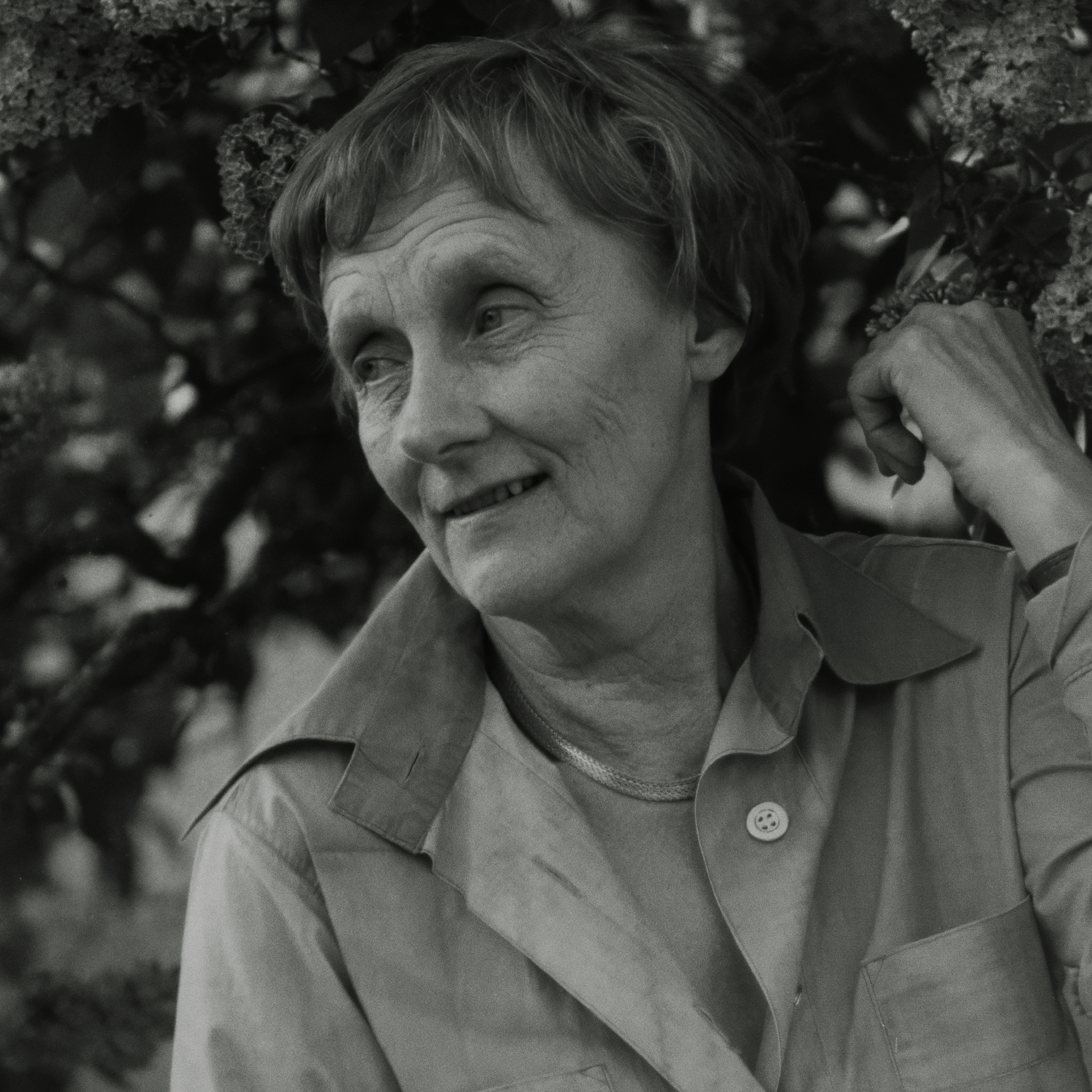
Astrid Lindgren’s daughter Karin Nyman describes Astrid as someone who was good at living, free from conventions.
The young Astrid was the first in Vimmerby to cut her hair short. At eighteen she became a single mother at a time when that was far from socially acceptable. Her struggle to provide care for her son left a lasting impact on both her life and work.
She cared deeply for the people in her life, maintaining constant correspondence with family and friends, and later through daily phone calls with her sisters, where the well-known phrase “Death, death, death” was born.
But she also made space for people beyond her immediate circle. A clear example is Sara Schwardt, a lonely girl from Värmland who began writing letters to Astrid Lindgren in the 1970s. Sara had a difficult home life and was looking for an adult she could trust, and Astrid chose to respond.
Astrid Lindgren often took part in public debates on violence, justice, and human values, and was willing to criticize both the political right and left when people were treated unjustly. She believed that a good society must be built on compassion, responsibility, and civil courage.
When she received the Peace Prize of the German Book Trade, she delivered her famous speech Never Violence!, in which she opposed corporal punishment and advocated for a form of parenting grounded in respect and love, in contrast to the authoritarian norms of the time.
She also challenged Swedish tax policy, as well as the Social Democratic movement she herself identified with, through the famous story Pomperipossa in Monismania. It sparked a national debate on taxation and fairness that is widely believed to have influenced the outcome of the 1976 Swedish election.
In the 1980s, she also became engaged in animal welfare issues, contributing to the Swedish animal welfare law, often referred to as Lex Lindgren.
Time and again, Astrid Lindgren showed how a single voice can help change an entire society.
“We all desire peace. So is there any possibility at all of our changing fundamentally, before it’s too late? Of our learning to distance ourselves from violence? Of our trying quite simply to become a new kind of human beings? But how could we go about that, and where should we start? I believe that we should start from the bottom. With the children.”
from Never Violence!, the speech Astrid Lindgren held when she was awarded the Peace Prize of the German Book Trade in 1978.:format(webp)/)
Astrid Lindgren, the opinion-maker
As a public opinion-shaper, Astrid Lindgren was unmatched, but there are also numerous examples of how she quietly supported and helped individuals obtain justice in an unfair world.
:format(webp)/)
Astrid Lindgren's legacy
Despite it now being many years since Astrid Lindgren passed away she most definitely still lives on amongst us. We read her books, watch her films, and sing her songs. Many are the quotes that have found their way into our vocabulary and her values still shape our understanding of what’s right or wrong, good and evil. Her importance to our society cannot be overstated.
:format(webp)/)
Our mother Astrid
"Our mother’s love for her family, her parents and her siblings, her husband, children and grandchildren was strong and enduring. She said the blend of freedom and security that she enjoyed in the home where she grew up had given her strength for life", writes Karin Nyman.